4.5
4.5



 Història
  Agenda


 Llibreries


 Inici
Inici 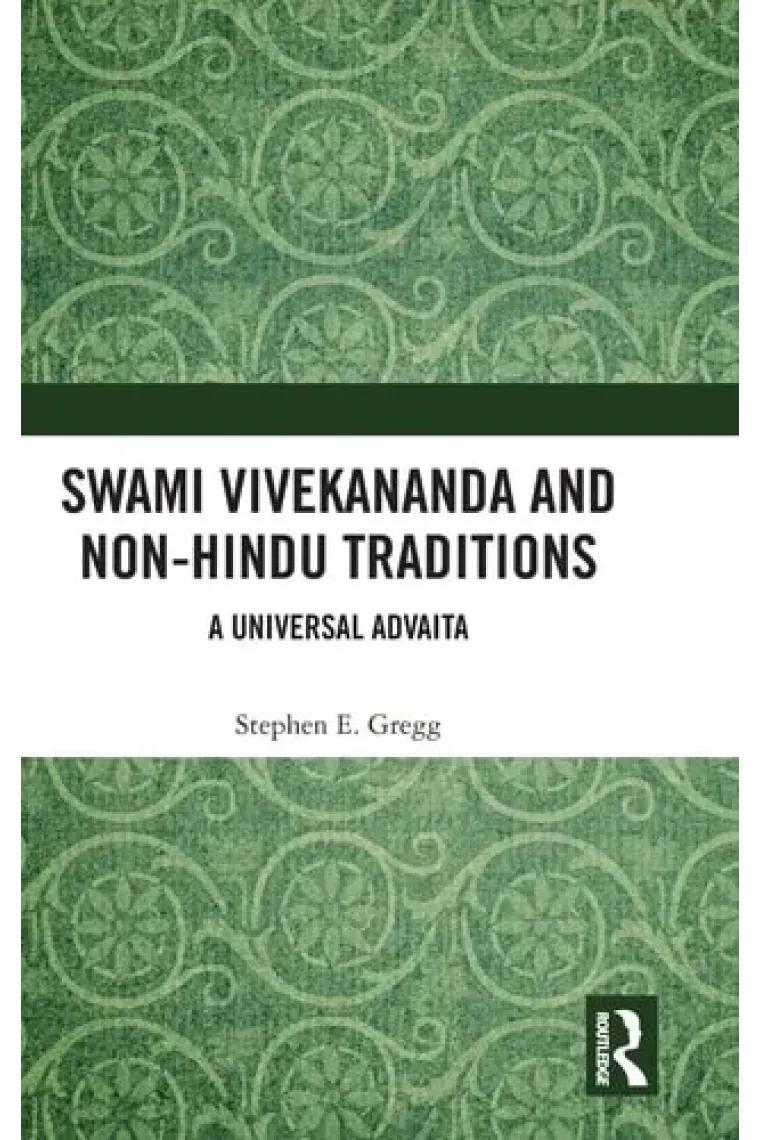


Detalls del llibre
The Hindu thinker Swami Vivekananda (1863-1902) was and remains an important figure both within India, and in the West, where he was notable for preaching Vedanta. Scholarship surrounding Vivekananda is dominated by hagiography and his (mis)appropriation by the political Hindu Right. This work demonstrates that Vivekananda was no simplistic pluralist, as portrayed in hagiographical texts, nor narrow exclusivist, as portrayed by some modern Hindu nationalists, but a thoughtful, complex inclusivist.
The book shows that Vivekananda formulated a hierarchical and inclusivistic framework of Hinduism, based upon his interpretations of a four-fold system of Yoga. It goes on to argue that Vivekananda understood his formulation of Vedantato be universal, and applied it freely to non-Hindu traditions, and in so doing, demonstrates that Vivekananda was consistently critical of 'low level' spirituality, not only in non-Hindu traditions, but also withinHinduism.
Demonstrating that Vivekananda is best understood within the context of 'Advaiticprimacy', rather than 'Hindu chauvinism', this book will be of interest to scholars of Hinduism and South Asian religion and of South Asian diaspora communities and religious studies more generally.
ly in non-Hindu traditions, but also withinHinduism.Demonstrating that Vivekananda is best understood within the context of 'Advaiticprimacy', rather than 'Hindu chauvinism', this book will be of interest to scholars of Hinduism and South Asian religion and of South Asian diaspora communities and religious studies more generally.
- Autor/a Stephen E. Gregg
- ISBN13 9781472483751
- ISBN10 1472483758
- Pàgines 260
- Any Edició 2026
- Fecha de publicación 12/05/2026
Ressenyes i valoracions
Sigues la primera persona a valorar-lo!
Has llegit Swami Vivekananda and Non-Hindu Traditions A Universal Advaita?


 Novetat
 Swami Vivekananda and Non-Hindu Traditions A Universal Advaita
- De
- Stephen E. Gregg
- |
- ROUTLEDGE (2026)
- 9781472483751


 Gràcies per comprar a llibreries reals!
 Whatsapp
 Facebook
 Linkedin
 X
X