4.5
4.5



 Història
  Agenda


 Llibreries


 Inici
Inici 


Detalls del llibre
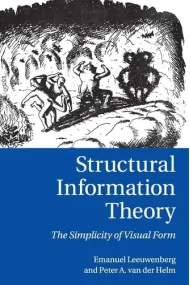
Structural information theory is a coherent theory about the way the human visual system organises a raw visual stimulus into objects and object parts. To humans, a visual stimulus usually has one clear interpretation even though, in theory, any stimulus can be interpreted in numerous ways. To explain this, the theory focuses on the nature of perceptual interpretations rather than on underlying process mechanisms and adopts the simplicity principle which promotes efficiency of internal resources rather than the likelihood principle which promotes veridicality in the external world. This theoretically underpinned starting point gives rise to quantitative models and verifiable predictions for many visual phenomena, including amodal completion, subjective contours, transparency, brightness contrast, brightness assimilation and neon illusions. It also explains phenomena such as induced temporal order, temporal context effects and hierarchical dominance effects, and extends to evaluative pattern qualities such as distinctiveness, interestingness and beauty.
Llegir més - Autors Emanuel (Radboud Universiteit Nijmegen) Leeuwenberg, Peter A. Van Der (Radboud Universiteit Nijmegen) Helm
- ISBN13 9781107531758
- ISBN10 1107531756
- Pàgines 340
- Any Edició 2015
- Fecha de publicación 02/07/2015
- Idioma Alemany, Francès
Ressenyes i valoracions
Sigues la primera persona a valorar-lo!
Has llegit Structural Information Theory: The Simplicity of Visual Form?



Structural Information Theory: The Simplicity of Visual Form (Alemany, Francès)
43,22€
45,50€
-5%
Enviament Gratuït
No disponible
43,22€
45,50€
-5%
Enviament Gratuït
No disponible


Devolució gratuïta

 Gràcies per comprar a llibreries reals!
 Whatsapp
 Facebook
 Linkedin
 X
X