4.5
4.5



 Història
  Agenda


 Llibreries


 Inici
Inici 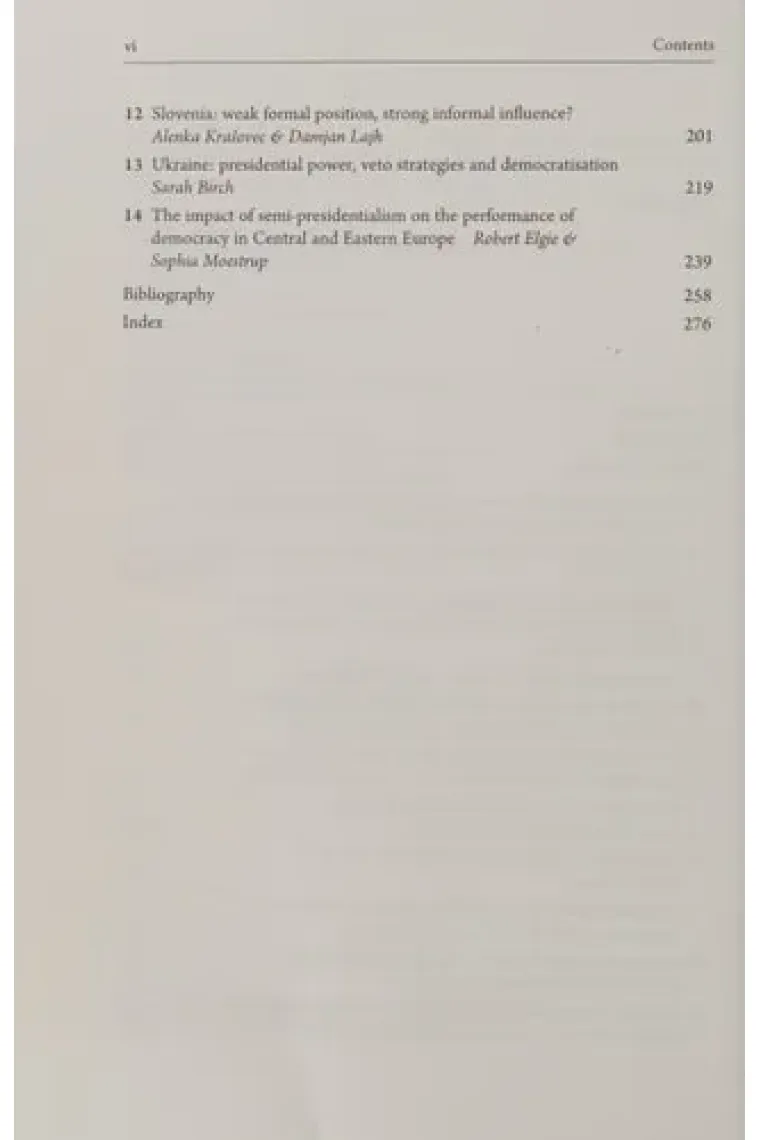


Detalls del llibre
This book examines the extent to which semi-presidentialism has affected the process of democratisation in Central and Eastern Europe since the early 1990s. The standard academic wisdom is that semi-presidentialism, where there is both a directly elected president and a prime minister who is responsible for the legislature, is a risky choice for nascent democracies because of the in-built potential for conflict between the president and the prime minister. This book demonstrates that semi-presidential regimes can operate in quite different ways, some with very strong presidents, some with strong prime ministers and ceremonial presidents, and some with a balance of presidential and prime ministerial powers. In particular, the book analyses the specific impact of the various forms of semi-presidentialism that can be found in Central and Eastern Europe. With chapters on Bulgaria, Croatia, Lithuania, Macedonia, Moldova, Poland, Romania, Russia, Serbia, Slovakia, Slovenia and Ukraine, the book explores whether some forms of semi-presidentialism are more conducive to democratization than others.It also looks at how semi-presidentialism may have helped democracy to survive and examines its impact on government performance in terms of stability and policy-making.
Llegir més - ISBN13 9780719075353
- ISBN10 0719075351
- Pàgines 296
- Any Edició 2008
- Fecha de publicación 15/12/2008
- Idioma Alemany, Francès
Ressenyes i valoracions
Sigues la primera persona a valorar-lo!
Has llegit Semi-Presidentialism in Central and Eastern Europe?


Semi-Presidentialism in Central and Eastern Europe (Alemany, Francès)
- De
- |
- Manchester University Press (2008)
- 9780719075353
111,15€
117,00€
-5%
Enviament Gratuït
No disponible
111,15€
117,00€
-5%
Enviament Gratuït
No disponible


Devolució gratuïta

 Gràcies per comprar a llibreries reals!
 Whatsapp
 Facebook
 Linkedin
 X
X