4.5
4.5



 Història
  Agenda


 Inici
Inici 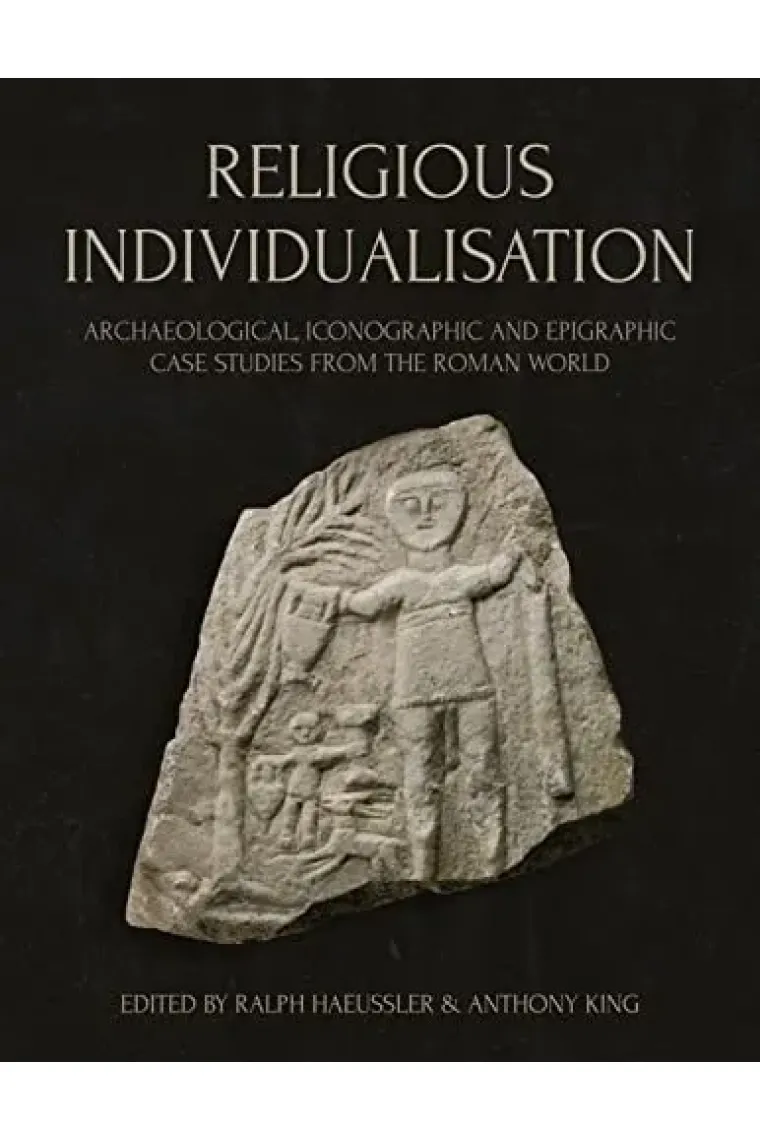


Detalls del llibre
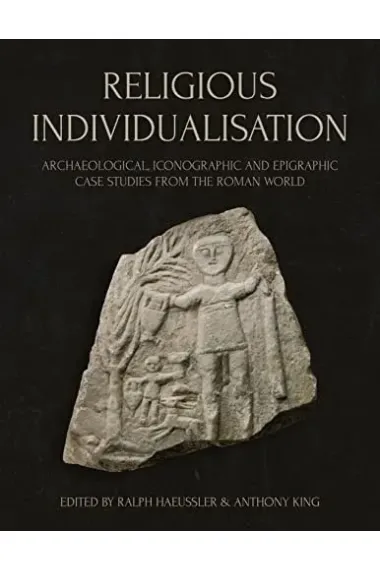
"Although the volume makes only a few cursory references to it, it is undeniable that it owes a great deal to Erfurt. Indeed, the current understanding of ancient religious individualization largely originates from the work of the long-term research group Religious Individualisation in Historical Perspective, which was based at the Max-Weber Center for Advanced Cultural and Social Studies (University of Erfurt) and codirected by Jörg Rüpke from 2008 to 2017. The project Lived Ancient Religion: Questioning "Cults"and "Polis-religion"(LAR), led by Rüpke between 2012 and 2017, is undoubtedly one of the most internationally impactful initiatives undertaken by this research group in the field of religious studies." - Journal of Anthropological ResearchThe Roman world was diverse and complex. And so were religious understandings and practices as mirrored in the enormous variety presented by archaeological, iconographic, and epigraphic evidence. Conventional approaches principally focus on the political role of civic cults as a means of social cohesion, often considered to be instrumentalised by elites. But by doing so, religious diversity is frequently overlooked, marginalising 'deviating' cult activities that do not fit the Classical canon, as well as the multitude of funerary practices and other religious activities that were all part of everyday life. In the Roman Empire, a person's religious experiences were shaped by many and sometimes seemingly incompatible cult practices, whereby the 'civic' and 'imperial' cults might have had the least impact of all. The authors rethink these methodologies, arguing for a more dynamic image of religion that takes into account the varied and often contradictory choices and actions of individual, which reflects the discrepant religious experiences in the Roman world. Is it possible to 'poke into the mind' of an individual in Roman times, whatever his/her status and ethnicity, and try to understand the individual's diverse experiences in such a complex, interconnected empire, exploring the choices that were open to an individual? This also raises the question whether the concept of individuality is valid for Roman times. In some periods, the impact of individual actions can be more momentous: the very first adoption of Roman-style sculpture, cult practices or Latin theonyms for indigenous deities can set in motion long-term processes that will significantly influence people's perceptions of local deities, their characteristics, and functions. Do individual choices and preferences prevail over collective identities in the Roman Empire compared to pre-Roman times? To examine these questions, this volume presents case studies that analyse individual actions in the religious sphere.
Llegir més - ISBN13 9781789259650
- ISBN10 1789259657
- Pàgines 336
- Any Edició 2026
- Fecha de publicación 18/05/2026
- Idioma Alemany, Francès
Ressenyes i valoracions
Sigues la primera persona a valorar-lo!
Has llegit Religious Individualisation: Archaeological, Iconographic and Epigraphic Case Studies from the Roman World?


 Novetat
 Religious Individualisation: Archaeological, Iconographic and Epigraphic Case Studies from the Roman World (Alemany, Francès)
- De
- |
- Oxbow Books (2026)
- 9781789259650
78,99€
83,15€
-5%
Enviament Gratuït
Disponible
78,99€
83,15€
-5%
Enviament Gratuït
Disponible


Enviament a domicili Gratuït
 Rep-lo en 10 dies laborables.
Llibreria Caselles Gratuït
Devolució gratuïta

 Gràcies per comprar a llibreries reals!
 Whatsapp
 Facebook
 Linkedin
 X
X