4.5
4.5



 Història
  Agenda


 Llibreries


 Inici
Inici 


Detalls del llibre
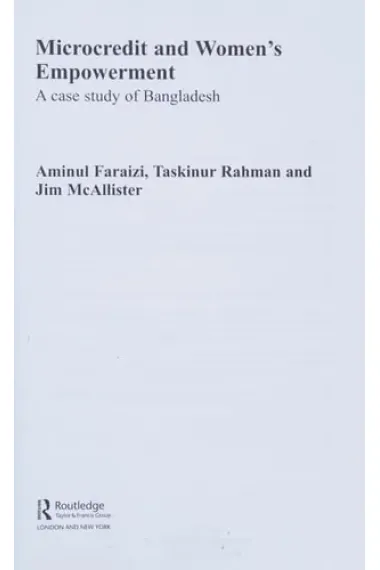
Using a case study of Bangladesh, and based on a long term participatory observation method, this book investigates claims of the success of microcredit, as well as the critiques of it, in the context of womenâe(tm)s empowerment. It confronts the distinction between womenâe(tm)s increasing wealth as a consequence of the success of microcredit programmes and their apparent non-commensurate empowerment, looking at two organisations (the Grameen Bank and the Bangladesh Rural Advancement Committee) as they operate in two localities in rural Bangladesh, in order to discover how enrichment and empowerment are often confused.
The book goes on to establish that the well-publicised success stories of the microcredit programme are blown out of proportion, and that the dynamics of collective responsibility for repayment of loans by a group of women borrowers âe" usually seen to be a tool for the success of microcredit âe" is in fact no less repressive than traditional debt collectors. This book makes a contribution to development debates; challenging adherents to more closely specify those conditions under which microcredit does indeed have validity, as well as providing insights relevant to South Asian Studies and Development Studies.
- Autors Aminul (CQUniversity Australia) Faraizi, Taskinur Rahman
- ISBN13 9780415584906
- ISBN10 0415584906
- Pàgines 144
- Any Edició 2026
- Fecha de publicación 08/05/2026
- Idioma Alemany, Francès
Ressenyes i valoracions
Sigues la primera persona a valorar-lo!
Has llegit Microcredit and Women's Empowerment: A Case Study of Bangladesh?


 Novetat
 Microcredit and Women's Empowerment: A Case Study of Bangladesh (Alemany, Francès)
- De
- Aminul (CQUniversity Australia) Faraizi, Taskinur Rahman
- |
- ROUTLEDGE (2026)
- 9780415584906


 Gràcies per comprar a llibreries reals!
 Whatsapp
 Facebook
 Linkedin
 X
X