4.5
4.5



 Història
  Agenda


 Llibreries


 Inici
Inici 
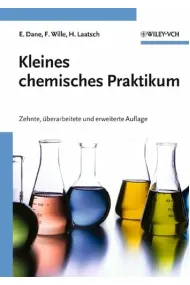


Detalls del llibre
Objects First Approach. Students learn to design with objects from the start. In more traditional approaches, students first learn "programming basics in the context of procedural programming in the small." Since this frame of reference is essen-tially useless when attacking large-scale problems, students must later "re-learn how to approach problems. Instructors can present material from a point of view that will "make sense" throughout the curriculum. Presentation and justification of programming principles and good techniques is easier. Emphasis on the distinction between class specification and implementation. Students learn to develop coherent class specifications early on, and to build components that conform to carefully defined, consistent specifications. The result is more main-tainable, error-free code. Early emphasis on testing and test-driven implementation. Students develop a habit of testing as part of the implementation process. Testing is essential to ensure quality programs. Current presentation of object-oriented design and Java. Students benefit from seeing general approaches to commonly occurring design patterns in a specific, well-defined context. This will also make it easier for students to "get the point" when such topics are introduced in upper-level design and software engineering courses. Other features include an emphasis on event-driven interfaces, rather than traditional procedural I/O; informal use of standard UML notation; use of the DrJava programming environment; introduction to generics and other new constructs of Java 5.0.
Llegir més - Autors Elisabeth Dane, Franz Wille, Hartmut (Universitat Gottingen) Laatsch
- ISBN13 9783527307517
- ISBN10 3527307516
- Pàgines 349
- Any Edició 2026
- Fecha de publicación 06/05/2026
Ressenyes i valoracions
Sigues la primera persona a valorar-lo!
Has llegit Kleines chemisches Praktikum?


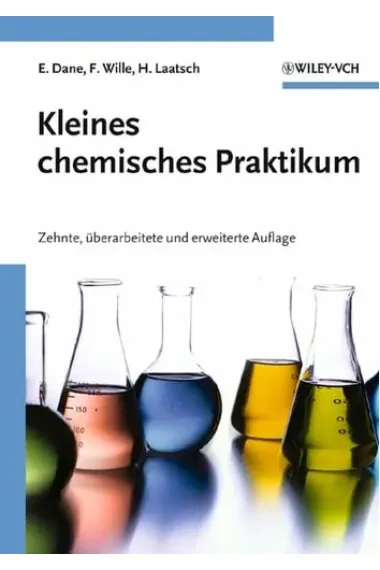
 Novetat
 Kleines chemisches Praktikum
- De
- Elisabeth Dane, Franz Wille, Hartmut (Universitat Gottingen) Laatsch
- |
- Wiley-VCH (2026)
- 9783527307517
46,31€
48,75€
-5%
Enviament Gratuït
No disponible
46,31€
48,75€
-5%
Enviament Gratuït
No disponible


Devolució gratuïta

 Gràcies per comprar a llibreries reals!
 Whatsapp
 Facebook
 Linkedin
 X
X