4.5
4.5



 Història
  Agenda


 Llibreries


 Inici
Inici 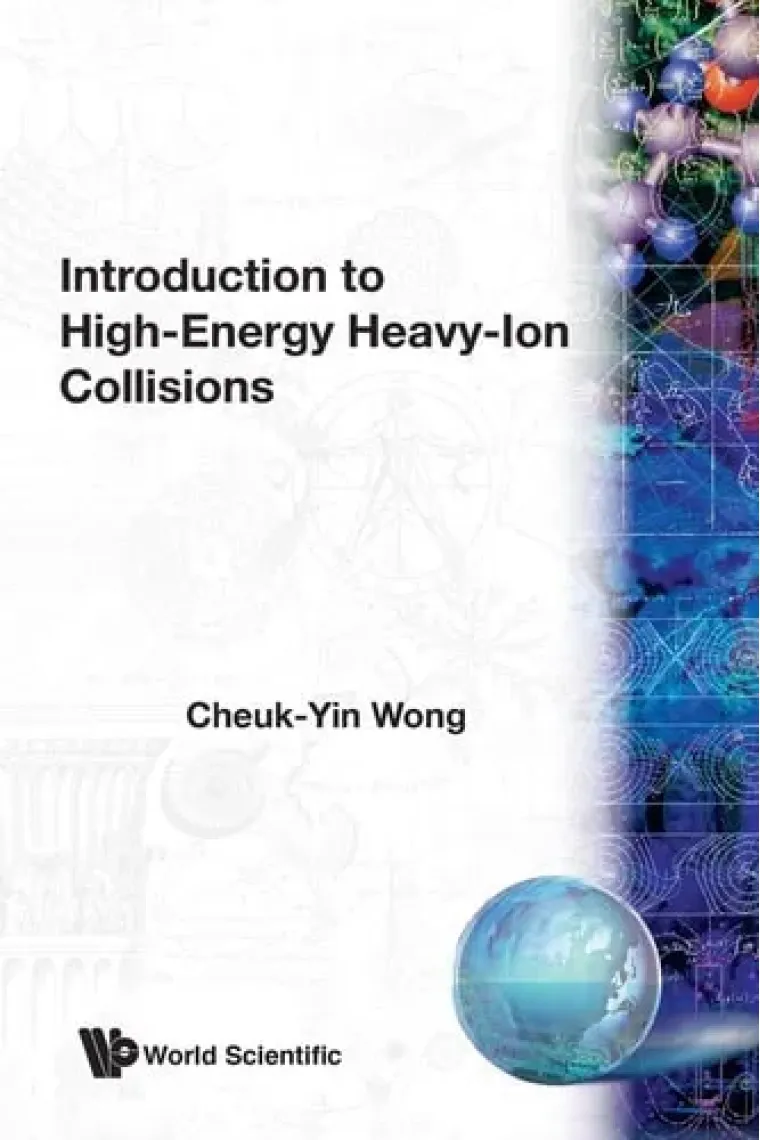


Detalls del llibre
1. Introduction. 2. Kinematic variables. 2.1. Notation and conventions. 2.2. Light-cone variables. 2.3. Rapidity variable. 2.4. Pseudorapidity variable -- 3. Nucleon-nucleon collisions. 3.1. Particle production in nucleon-nucleon collisions. 3.2. Baryon energy loss in an inelastic collision -- 4. Hard processes in nucleon-nucleon collisions. 4.1. The infinite-momentum frame. 4.2. Relativistic hard-scattering model. 4.3. Counting rules. 4.4. Application of the hard-scattering model. 4.5. Direct fragmentation process -- 5. Particle production in a strong field. 5.1. Schwinger particle production mechanism. 5.2. Particle production rate -- 6. Particle production in two-dimensional quantum electrodynamics. 6.1. Qualitative description of QED[symbol]. 6.2. Relation between j[symbol] and A[symbol] in QED[symbol]. 6.3. Inside-outside cascade. 6.4. Rapidity distribution from QED[symbol] -- 7. Classical string model. 7.1. The string model of hadrons. 7.2. The yo-yo model of stable particles. 7.3. A yo-yo state in motion. 7.4. The symmetric Lund model. 7.5. Lund model for nuclear collisions -- 8. Dual parton model. 8.1. Dual resonance model. 8.2. Pomeron exchange. 8.3. Particle production processes -- 9. Quarks, gluons, and quark-gluon plasma. 9.1. Quarks and gluons. 9.2. Bag model of a hadron. 9.3. Quark-gluon plasma -- 10. Lattice gauge theory. 10.1. Path integral method for a single-particle system. 10.2. Partition function for a single-particle system. 10.3. Path integral method for a scalar field. 10.4. Partition function for a scalar field. 10.5. Basic quantities in lattice gauge theory. 10.6. The Lagrangian and the Euclidean action for QCD. 10.7. Euclidean space and Minkowski space compared and contrasted. 10.8. Fermion part of the Euclidean action -- 11. Results from lattice gauge theory. 11.1. The Wilson loop. 11.2. The order of a phase transition. 11.3. Mean-field approximation. 11.4. Numerical results from lattice gauge theory. 11.5. Lattice gauge calculations with fermions -- 12. Nucleus-nucleus collisions. 12.1. Multiple collisions and nuclear stopping. 12.2. Glauber model of nucleus-nucleus collision. 12.3. Some analytic examples
Llegir més - ISBN13 9789810202644
- ISBN10 9810202644
- Pàgines 516
- Any Edició 1994
- Fecha de publicación 02/05/1994
- Idioma Alemany, Francès
Ressenyes i valoracions
Sigues la primera persona a valorar-lo!
Has llegit Introduction To High-energy Heavy-ion Collisions?



Introduction To High-energy Heavy-ion Collisions (Alemany, Francès)
- De
- |
- World Scientific Publishing Company (1994)
- 9789810202644
56,81€
59,80€
-5%
Enviament Gratuït
No disponible
56,81€
59,80€
-5%
Enviament Gratuït
No disponible


Devolució gratuïta

 Gràcies per comprar a llibreries reals!
 Whatsapp
 Facebook
 Linkedin
 X
X