4.5
4.5



 Història
  Agenda


 Inici
Inici 


Detalls del llibre
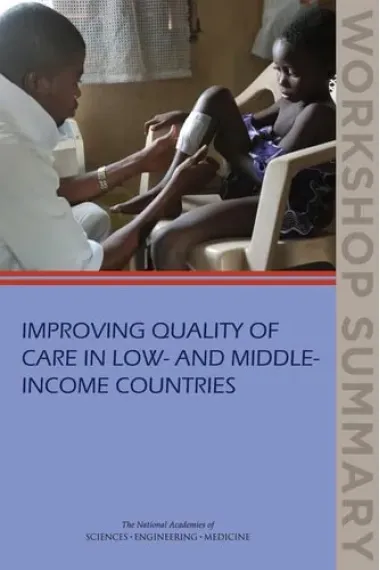
Quality of care is a priority for U.S. Agency for International Development (USAID). The agency's missions abroad and their host country partners work in quality improvement, but a lack of evidence about the best ways to facilitate such improvements has constrained their informed selection of interventions. Six different methods - accreditation, COPE, improvement collaborative, standards-based management and recognitions (SBM-R), supervision, and clinical in-service training - currently make up the majority of this investment for USAID missions. As their already substantial investment in quality grows, there is demand for more scientific evidence on how to reliably improve quality of care in poor countries. USAID missions, and many other organizations spending on quality improvement, would welcome more information about how different strategies work to improve quality, when and where certain tools are most effective, and the best ways to measure success and shortcomings.
To gain a better understanding of the evidence supporting different quality improvement tools and clarity on how they would help advance the global quality improvement agenda, the Institute of Medicine convened a 2-day workshop in January 2015. The workshop's goal was to illuminate these different methods, discussing their pros and cons. This workshop summary is a description of the presentations and discussions.
- Autors Institute Of Medicine, Board On Global Health
- ISBN13 9780309373425
- ISBN10 0309373425
- Pàgines 108
- Any Edició 2026
- Fecha de publicación 02/05/2026
- Idioma Alemany, Francès
Ressenyes i valoracions
Sigues la primera persona a valorar-lo!
Has llegit Improving Quality of Care in Low- and Middle-Income Countries: Workshop Summary?


 Novetat
 Improving Quality of Care in Low- and Middle-Income Countries: Workshop Summary (Alemany, Francès)
- De
- Institute Of Medicine, Board On Global Health
- |
- Michael Joseph Ltd (2026)
- 9780309373425


Enviament a domicili Gratuït
 Rep-lo en 10 dies laborables.
Llibreria Caselles Gratuït

 Gràcies per comprar a llibreries reals!










 Whatsapp
 Facebook
 Linkedin
 X
X