4.5
4.5



 Història
  Agenda


 Llibreries


 Inici
Inici 


Detalls del llibre
This collection explores the stakes, risks and opportunities invoked in opening and exploring law's archive and re-examining law's evidence. It draws together work exploring how evidence is used or mis-used during the legal process, and re-used after the law's work has concluded by engaging with ethical, aesthetic or emotional dimensions of using law's evidence. Within socio-legal discourse, the move towards 'open justice' has emerged concurrently with a much broader cultural sensibility, one that has been called the "archival turn" (Ann Laura Stoler), the "archival impulse" (Hal Foster) and "archive fever" (Jacques Derrida). Whilst these terms do not describe exactly the same phenomena, they collectively acknowledge the process by which we create a fetish of the stored document. The archive facilitates our material confrontation with history, historicity, order, linearity, time and bureaucracy. For lawyers, artists, journalists, publishers, curators and scholars, the document in the archive has the attributes of authenticity, contemporaneity, and the unique tangibility of a real moment captured in material form. These attributes form the basis for the strict interpretive limits imposed by the rules of evidence and procedure. These rules do not contain the other attributes of the archival document, those that make it irresistible as the basis for creative work: beauty, violence, surprise, shame, volume, and the promise that it contains a tantalising secret. This book was previously published as a special issue of Australian Feminist Law Journal.
- Autors Katherine Biber, Trish Luker
- ISBN13 9781138210325
- ISBN10 1138210323
- Pàgines 168
- Any Edició 2026
- Fecha de publicación 15/05/2026
Ressenyes i valoracions
Sigues la primera persona a valorar-lo!
Has llegit Evidence and the Archive Ethics, Aesthetics and Emotion?



 Novetat
 Evidence and the Archive Ethics, Aesthetics and Emotion
- De
- Katherine Biber, Trish Luker
- |
- ROUTLEDGE (2026)
- 9781138210325


 Gràcies per comprar a llibreries reals!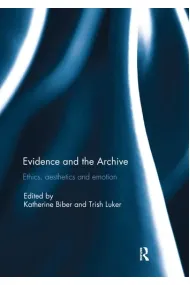
 Whatsapp
 Facebook
 Linkedin
 X
X