4.5
4.5



 Història
  Agenda


 Llibreries


 Inici
Inici 
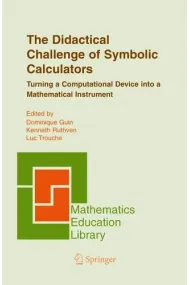


Detalls del llibre
A significant driver of recent growth in the use of mathematics in the professions has been the support brought by new technologies. Not only has this facilitated the application of established methods of mathematical and statistical analysis but it has stimulated the development of innovative approaches. These changes have produced a marked evolution in the professional practice of mathematics, an evolution which has not yet provoked a corresponding adaptation in mathematical education, particularly at school level. In particular, although calculators -- first arithmetic and scientific, then graphic, now symbolic -- have been found well suited in many respects to the working conditions of pupils and teachers, and have even achieved a degree of official recognition, the integration of new technologies into the mathematical practice of schools remains marginal. It is this situation which has motivated the research and development work to be reported in this volume. The appearance of ever more powerful and portable computational tools has certainly given rise to continuing research and development activity at all levels of mathematical education. Amongst pioneers, such innovation has often been seen as an opportunity to renew the teaching and learning of mathematics. Equally, however, the institutionalization of computational tools within educational practice has proceeded at a strikingly slow pace over many years.
Llegir més - ISBN13 9781441935823
- ISBN10 1441935827
- Pàgines 308
- Any Edició 2010
- Fecha de publicación 06/12/2010
- Idioma Alemany, Francès
Ressenyes i valoracions
Sigues la primera persona a valorar-lo!
Has llegit Didactical Challenge of Symbolic Calculators: Turning a Computational Device into a Mathematical Instrument?


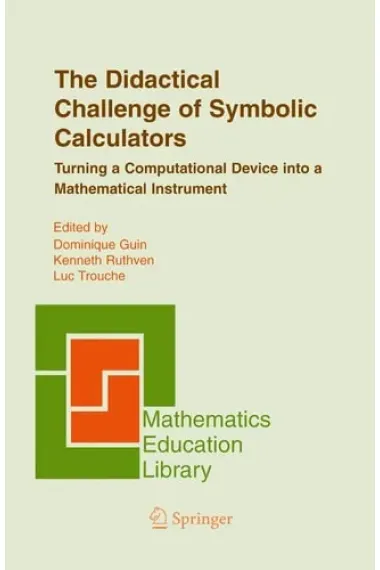
Didactical Challenge of Symbolic Calculators: Turning a Computational Device into a Mathematical Instrument (Alemany, Francès)
- De
- |
- SPRINGER N.Y. (2010)
- 9781441935823
123,50€
130,00€
-5%
Enviament Gratuït
No disponible
123,50€
130,00€
-5%
Enviament Gratuït
No disponible


Devolució gratuïta

 Gràcies per comprar a llibreries reals!
 Whatsapp
 Facebook
 Linkedin
 X
X