4.5
4.5



 Història
  Agenda


 Llibreries


 Inici
Inici 
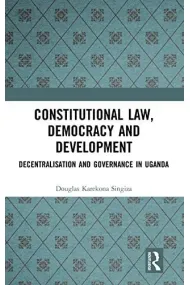


Detalls del llibre
Uganda, like many African countries in the 1990s, adopted decentralisation as a state reform measure after many years of civil strife and political conflicts, by transferring powers and functions to district councils. The decision to transfer powers and functions to district councils was, in the main, linked to the quest for democracy and development within the broader context of the nation state. This book's broader aim is to examine whether the legal and policy framework of decentralisation produces a system of governance that better serves the greater objectives of local democracy, local development and accommodation of ethnicity. Specifically, the book pursues one main aim: to examine whether indeed the existing legal framework ensures the smooth devolution process that is needed for decentralised governance to succeed. In so doing, the book seeks, overall, to offer lessons that are critically important not only for Uganda but any other developing nation that has adopted decentralisation as a state-restructuring strategy. The book uses a desk-top research method by reviewing Uganda's decentralisation legal and policy frameworks.
ate-restructuring strategy. The book uses a desk-top research method by reviewing Uganda's decentralisation legal and policy frameworks.- Autor/a Douglas Karekona Singiza
- ISBN13 9781138353473
- ISBN10 1138353477
- Pàgines 268
- Any Edició 2026
- Fecha de publicación 14/05/2026
Ressenyes i valoracions
Sigues la primera persona a valorar-lo!
Has llegit Constitutional Law, Democracy and Development Decentralization and Governance in Uganda?


 Novetat
 Constitutional Law, Democracy and Development Decentralization and Governance in Uganda
- De
- Douglas Karekona Singiza
- |
- ROUTLEDGE (2026)
- 9781138353473


 Gràcies per comprar a llibreries reals!
 Whatsapp
 Facebook
 Linkedin
 X
X