4.5
4.5



 Història
  Agenda


 Llibreries


 Inici
Inici 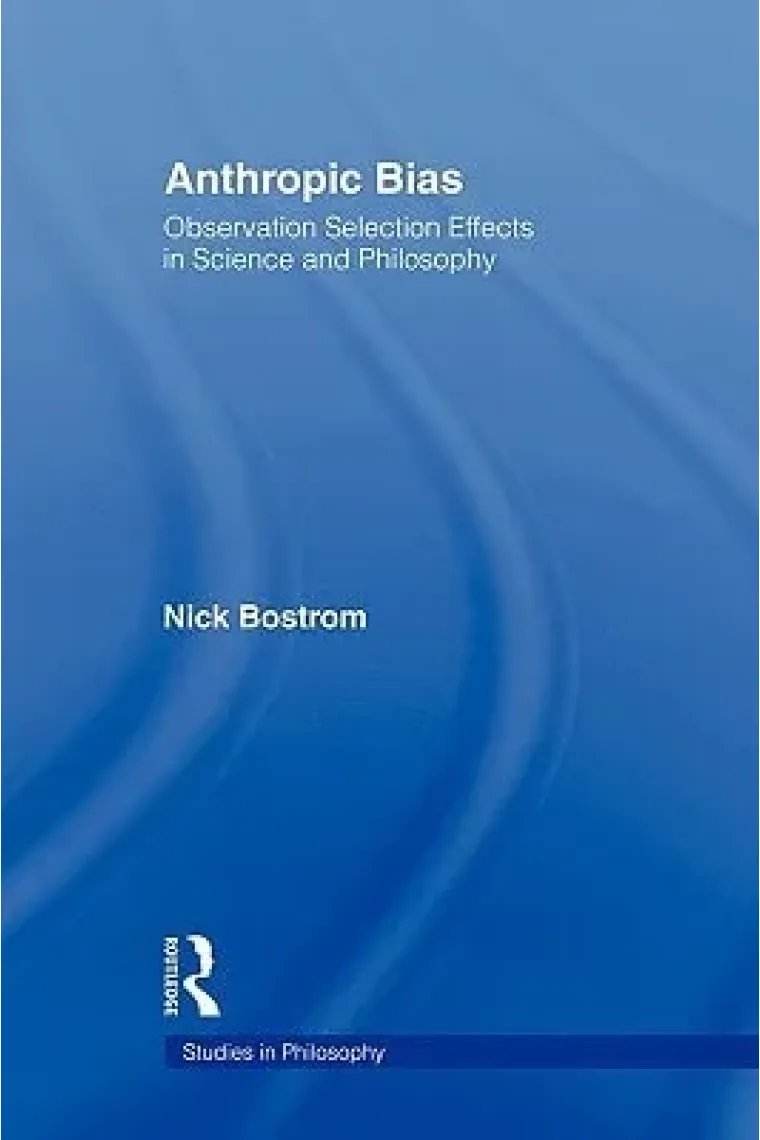


Detalls del llibre
Anthropic Bias explores how to reason when you suspect that your evidence is biased by "observation selection effects"--that is, evidence that has been filtered by the precondition that there be some suitably positioned observer to "have" the evidence. This conundrum--sometimes alluded to as "the anthropic principle," "self-locating belief," or "indexical information"--turns out to be a surprisingly perplexing and intellectually stimulating challenge, one abounding with important implications for many areas in science and philosophy.
There are the philosophical thought experiments and paradoxes: the Doomsday Argument; Sleeping Beauty; the Presumptuous Philosopher; Adam & Eve; the Absent-Minded Driver; the Shooting Room.
And there are the applications in contemporary science: cosmology ("How many universes are there?", "Why does the universe appear fine-tuned for life?"); evolutionary theory ("How improbable was the evolution of intelligent life on our planet?"); the problem of time's arrow ("Can it be given a thermodynamic explanation?"); quantum physics ("How can the many-worlds theory be tested?"); game-theory problems with imperfect recall ("How to model them?"); even traffic analysis ("Why is the 'next lane' faster?").
Anthropic Bias argues that the same principles are at work across all these domains. And it offers a synthesis: a mathematically explicit theory of observation selection effects that attempts to meet scientific needs while steering clear of philosophical paradox.
- Autor/a Nick Bostrom
- ISBN13 9780415883948
- ISBN10 0415883946
- Pàgines 224
- Any Edició 2026
- Fecha de publicación 07/05/2026
- Idioma Alemany, Francès
Ressenyes i valoracions
Sigues la primera persona a valorar-lo!
Has llegit Anthropic Bias: Observation Selection Effects in Science and Philosophy?


 Novetat
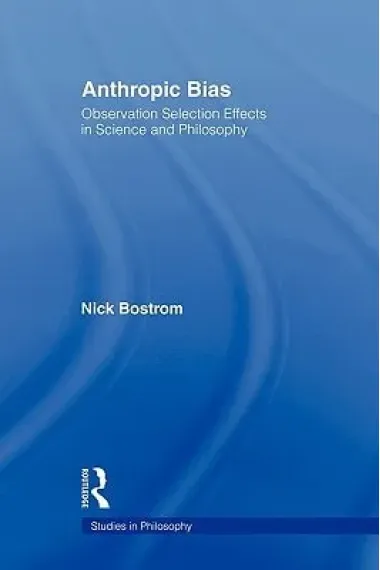
 Anthropic Bias: Observation Selection Effects in Science and Philosophy (Alemany, Francès)
- De
- Nick Bostrom
- |
- ROUTLEDGE (2026)
- 9780415883948


 Gràcies per comprar a llibreries reals!



 Whatsapp
 Facebook
 Linkedin
 X
X