4.5
4.5



 Geschichte
  Terminkalender


 Buchhandlungen


 Anfang
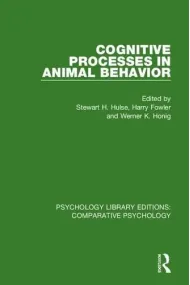


Buch Details
II. Blocking as a Problem for Association Theory -- III. Analysis of the Attenuation of Blocking by Surprising Changes in Reinforcement -- IV. Conclusions and Implications -- References -- 7 Expectancies and the Priming of STM -- I. Expectancies and the Priming of STM -- II. The Priming of STM -- Ill. Retrieval-Generated Priming -- IV. Self-Generated Priming -- V. Extrapolation -- VI. Concluding Comments -- References -- 8 Studies of Working Memory in the Pigeon -- I. Working Memory, Reference Memory, and Associative Memory -- II. Three Working-Memory Paradigms -- Ill. The Advance-Key Procedure -- IV. The Modified Advance-Key Procedure -- V. The Control-Key Procedure -- VI. The Functional Characteristics of the Initial Stimulus Period -- VII. The Role of Differential Stimulus Feedback in the Terminal Period -- VIII. General Discussion -- References -- 9 Selective Attention and Related Cognitive Processes in Pigeons -- I. Selective Attention and Related Cognitive Processes in Pigeons -- II. The Analysis of Element-Compound Differences -- Ill. Stimulus Compounds and Information Processing -- IV. The Effect of Sample Exposure Time on Matching Performance -- V. Conclusion -- References -- 10 The Internal Clock -- I. Time as a Stimulus -- II. Explanations of Temporal Discrimination -- Ill. Some Properties of the Internal Clock -- IV. Control of the Internal Clock -- V. Conclusions -- References -- 11 Cognitive Structure and Serial Pattern Learning by Animals -- I. Introduction -- II. Cognitive Structures and Serial Pattern Learning -- Ill. Application of Cognitive Structures to Serial Patterns in Animal Learning -- IV. Patterns of Reinforcement -- V. Mechanisms for Serial Ordering -- VI. Empirical Assessment of Encoding -- VII. The Sensitivity of Animals to Structure -- VIII. Conclusion -- References -- 12 Characteristics of Spatial Memory
Lesen Sie mehr - Schriftsteller Stewart H. Hulse, Harry Fowler, Werner K. Honig
- ISBN13 9781138562158
- ISBN10 1138562157
- Buchseiten 482
- Jahr der Ausgabe 2018
- Fecha de publicación 22/02/2018
Rezensionen und Bewertungen
Sei die erste Person, die es bewertet!
Hast du gelesen Cognitive Processes in Animal Behavior?


Cognitive Processes in Animal Behavior
- Von
- Stewart H. Hulse, Harry Fowler, Werner K. Honig
- |
- ROUTLEDGE (2018)
- 9781138562158
177,22€
186,55€
-5%
Sendung Kostenlos
Nicht verfügbar
177,22€
186,55€
-5%
Sendung Kostenlos
Nicht verfügbar


Kostenlose Rücksendung

 Vielen Dank für Ihren Einkauf in echten Buchhandlungen!
 Whatsapp
 Facebook
 Linkedin
 X
X