4.5
4.5



 Història
  Agenda


 Llibreries


 Inici
Inici 


Detalls del llibre
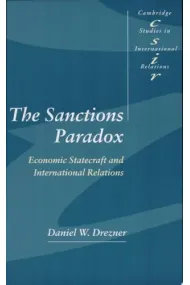
Despite their increasing importance, there is little theoretical understanding of why nation-states initiate economic sanctions, or what determines their success. This 1999 book argues that both imposers and targets of economic coercion incorporate expectations of future conflict as well as the short-run opportunity costs of coercion into their behaviour. Drezner argues that conflict expectations have a paradoxical effect. Adversaries will impose sanctions frequently, but rarely secure concessions. Allies will be reluctant to use coercion, but once sanctions are used, they can result in significant concessions. Ironically, the most favourable distribution of payoffs is likely to result when the imposer cares the least about its reputation or the distribution of gains. The book's argument is pursued using game theory and statistical analysis, and detailed case studies of Russia's relations with newly-independent states, and US efforts to halt nuclear proliferation on the Korean peninsula.
Llegir més - Autor/a Daniel W. (University Of Chicago) Drezner
- ISBN13 9780521644150
- ISBN10 0521644151
- Pàgines 342
- Any Edició 1999
- Fecha de publicación 26/08/1999
- Idioma Alemany, Francès
Ressenyes i valoracions
Sigues la primera persona a valorar-lo!
Has llegit Sanctions Paradox: Economic Statecraft and International Relations?



Sanctions Paradox: Economic Statecraft and International Relations (Alemany, Francès)
- De
- Daniel W. (University Of Chicago) Drezner
- 9780521644150
56,81€
59,80€
-5%
Enviament Gratuït
No disponible
56,81€
59,80€
-5%
Enviament Gratuït
No disponible


Devolució gratuïta

 Gràcies per comprar a llibreries reals!

 Whatsapp
 Facebook
 Linkedin
 X
X